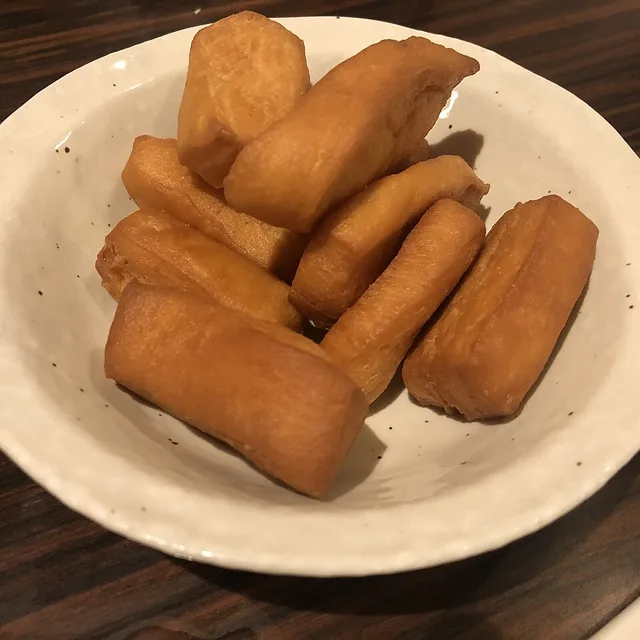
 📷 CC BY-SA 4.0 · UjuiUjuMandan · via Wikimedia Commons
Dessert · Mongolia · Ulaanbaatar
Boortsog (Mongolian Sweet Fried Bread Piles) 🍩
Every ger you will ever be invited into has a pyramid of these on a blue-and-white porcelain plate, and every host will refill it without asking: boortsog, a sugar-sweetened milk dough cut into diamonds, twisted, and fried puffed and golden, stacked like firewood with a bowl of suutei tsai (salty milk tea) beside it. The logic of the steppe — no oven, no pantry, no refrigeration, but flour, milk fat and a black cauldron over dung fire make a dessert that survives weeks in a saddlebag and softens again when tea is poured over it. Ulaanbaatar bakeries sell them by the kilogram in plastic bags; eat them warm with jam, or dunk them until they are half soup.
Méthode
-
1
Mix flour, yeast, sugar and salt. Pour in warm milk with yogurt and melted fat; knead 6-8 minutes to a smooth, slightly firm dough — firmer than bread dough. Cover, prove 1 hour until nearly doubled (a warm ger corner in winter takes longer; the fast version skips this).
-
2
Roll on a floured board to a 1 cm slab and cut into 8 cm diamonds, or roll balls and flatten, or twist the classic knot: cut a slit in the middle of each diamond and fold one corner through. Rest 10 minutes; they should look slightly alive.
-
3
Heat oil to 170°C — a scrap of dough should sizzle and rise in three seconds. Fry a few at a time, turning once, until all faces are deep gold and they feel lighter than they look, 2-3 minutes. Too cool and they drink oil; too hot and the middle stays raw.
-
4
Drain briefly on a rack (not paper alone — they steam and go tough). Serve in the traditional pile, tallest in the middle, with jam in a saucer and salted milk tea either sipped alongside or poured over the top for the dunking school.
-
5
Storage: cooled boortsog keep a week in a cloth bag and a month in a sealed tin — which is, historically, the entire point.
Commentaires
Connectez-vous pour participer.
Aucun commentaire pour l'instant. Partagez votre expérience.